

Over the past decade, financial markets have become dramatically more accessible.
Brokerage accounts can be opened in minutes. Crypto markets operate around the clock. Prediction markets allow anyone to express a view on real-world events. New financial infrastructure has lowered the barriers to participation across an increasingly broad range of assets.
In many respects, access has already been democratized.
What has not been democratized is financial intelligence.
Most individual investors can access the same markets as professional investors, but they do not have access to the same decision-making systems. They may see the same prices, headlines, charts, and data, yet lack the frameworks needed to determine which signals matter, how those signals should be interpreted, how much risk to take, or when a thesis should be abandoned.
That gap remains one of the most persistent inequalities in modern finance.
The best financial judgment has traditionally been concentrated within hedge funds, private banks, family offices, and institutional investment firms. It is supported by experienced portfolio managers, analysts, proprietary research, sophisticated risk systems, and years of accumulated market knowledge.
Our mission at Questflow is to make that kind of intelligence more broadly accessible.
Financial Intelligence for All.
We are building a platform where top investors can turn their market judgment into AI Agents that retail investors can follow, understand, and invest with across markets.
The objective is not simply to give users more information.
It is to give them access to better judgment.
Access to Markets Was Only the First Step
The first generation of financial technology was primarily focused on access.
Online brokerages reduced trading fees. Mobile applications made investing more convenient. Crypto exchanges introduced global, always-on markets. Onchain infrastructure further reduced the friction associated with custody, settlement, and financial participation.
These developments were important. They expanded the number of people who could participate in financial markets.
But participation and informed decision-making are not the same thing.
A trading interface can display the price of an asset, but it cannot tell an investor whether that price is attractive.
A chart can show historical movement, but it cannot explain which underlying drivers are likely to matter next.
A market terminal can provide enormous amounts of information, but it still leaves the user responsible for the most difficult questions:
What matters?
What does it mean?
What should I do?
How much should I risk?
What would prove me wrong?
These are not questions of access. They are questions of judgment.
This is where professional investors have historically had a significant advantage.
Experienced investors do not simply consume more information. They develop a system for interpreting it. They learn which signals are meaningful, which sources are reliable, how different variables interact, how to update a thesis as conditions change, and when market behavior contradicts their expectations.
That process is difficult to replicate through a traditional trading application.
We believe AI creates a new possibility.
The Opportunity Is Not Generic AI. It Is Structured Expert Judgment.
There is a common assumption that financial AI should begin with a general-purpose model and ask it to discover profitable opportunities on its own.
We believe this approach misunderstands where durable financial intelligence comes from.
Frontier AI models are increasingly capable, but expert financial judgment does not automatically emerge from general intelligence alone.
Markets require more than the ability to summarize information or reason over a large context window. Good investing depends on domain knowledge, experience, pattern recognition, risk discipline, and a consistent framework for distinguishing signal from noise.
Recent research has also reinforced this point. Frontier models can perform impressively on many general tasks, yet still struggle to reproduce expert-level financial judgment without high-quality domain data, expert annotations, and carefully designed workflows.
For us, this is not a limitation. It is the opportunity.
The goal is not to ask a generic model to invent alpha.
The goal is to capture the judgment that already exists in the minds of strong investors and make it structured, scalable, and executable.
Great investors already have frameworks.
They know what information they monitor.
They know which signals carry weight.
They know what increases or decreases conviction.
They know the conditions under which they will enter a position.
They know what would invalidate their thesis.
They know how to size risk.
They know when not to trade.
The difficulty is that this knowledge is often tacit.
It lives in investment committee discussions, research notes, spreadsheets, dashboards, private messages, and years of accumulated experience. It is rarely expressed as a complete, structured system that another person can follow.
AI changes that.
It gives us a way to turn tacit investment judgment into an explicit and continuously usable framework.
We Are Turning Top Investors Into AI Agents
At the center of Questflow is a simple idea:
Top investors become AI Agents.
The investor remains the source of judgment.
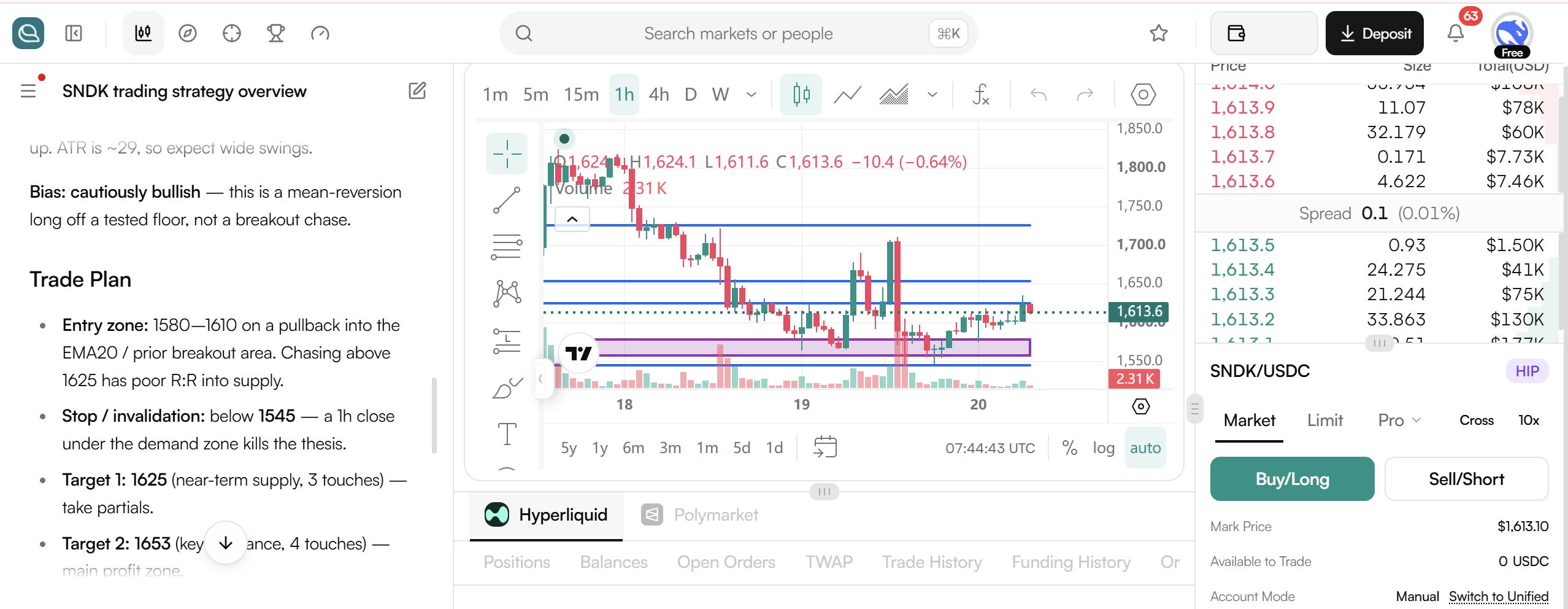
The AI Agent becomes the mechanism through which that judgment is structured, monitored, explained, and executed.
Consider an experienced macro investor.
Over time, that investor may have developed a framework around inflation expectations, interest rates, positioning, energy markets, liquidity conditions, and central-bank communication.
The investor does not look at each variable in isolation. What matters is how they interact.
Certain combinations may increase conviction.
Others may indicate that the original thesis is weakening.
Some signals may be leading indicators. Others may merely confirm what has already happened.
This kind of judgment is difficult to communicate at scale.
An investor can publish a research note, but a note is static.
They can post on social media, but a post usually captures only one moment or one idea.
They can run a fund, but access to funds is restricted by capital, geography, regulation, and distribution.
They can offer copy trading, but copying a trade does not necessarily reveal the reasoning that produced it.
An AI Agent creates a different form of distribution.
With Questflow, an investor’s methodology can become a living system.
The Agent can understand the investor’s thesis, information sources, signal hierarchy, trigger conditions, invalidation rules, and risk parameters.
It can monitor new information continuously.
It can identify when market conditions match the investor’s framework.
It can explain why a particular development matters.
It can update the user when the framework changes.
And, with explicit permission, it can help execute within predefined boundaries.
The investor provides the judgment.
AI makes that judgment scalable.
We Want Users to Understand the Decision, Not Simply Copy the Position
Traditional social trading has proven that investors are interested in following other investors.
But most social-trading products reduce an investment framework to a transaction.
A trader buys.
A follower copies.
The action is visible, but the reasoning is often not.
We believe that is insufficient.
A position only becomes meaningful when its context is understood.
Why was the trade entered?
What assumptions support it?
What signals are being monitored?
What would increase conviction?
What would cause the investor to reduce the position?
What would invalidate the thesis entirely?
What risk limits apply?
These questions matter because professional investing is not simply a sequence of trades. It is a process of continuously updating beliefs under uncertainty.
Questflow is designed to make more of that process visible.
We want users to be able to follow investors they trust while also understanding the frameworks behind their decisions.
That means moving beyond a system that tells users only what happened.
Over time, the system should also help explain why it happened, what assumptions were involved, and how those assumptions are evolving.
This creates a more informed relationship between investors and AI Agents.
The objective is not blind automation.
It is informed delegation.
Users should understand the intelligence they are following, define the boundaries within which it may operate, and retain control over risk.
The Financial Harness: Connecting Intelligence With Financial Action
To make this possible, we are building what we call the Financial Harness.
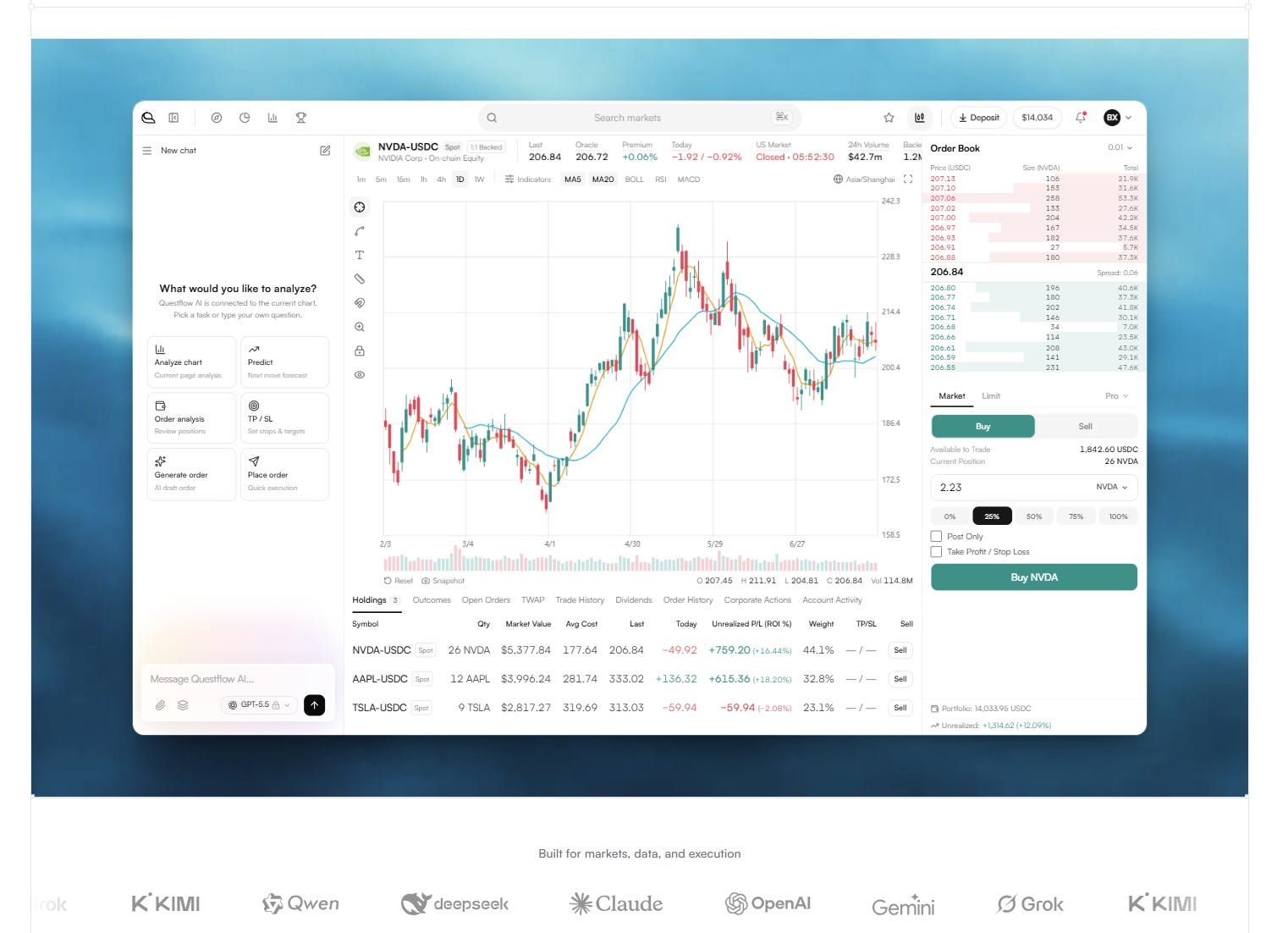
The Financial Harness is the foundation that connects AI intelligence with real financial workflows and execution.
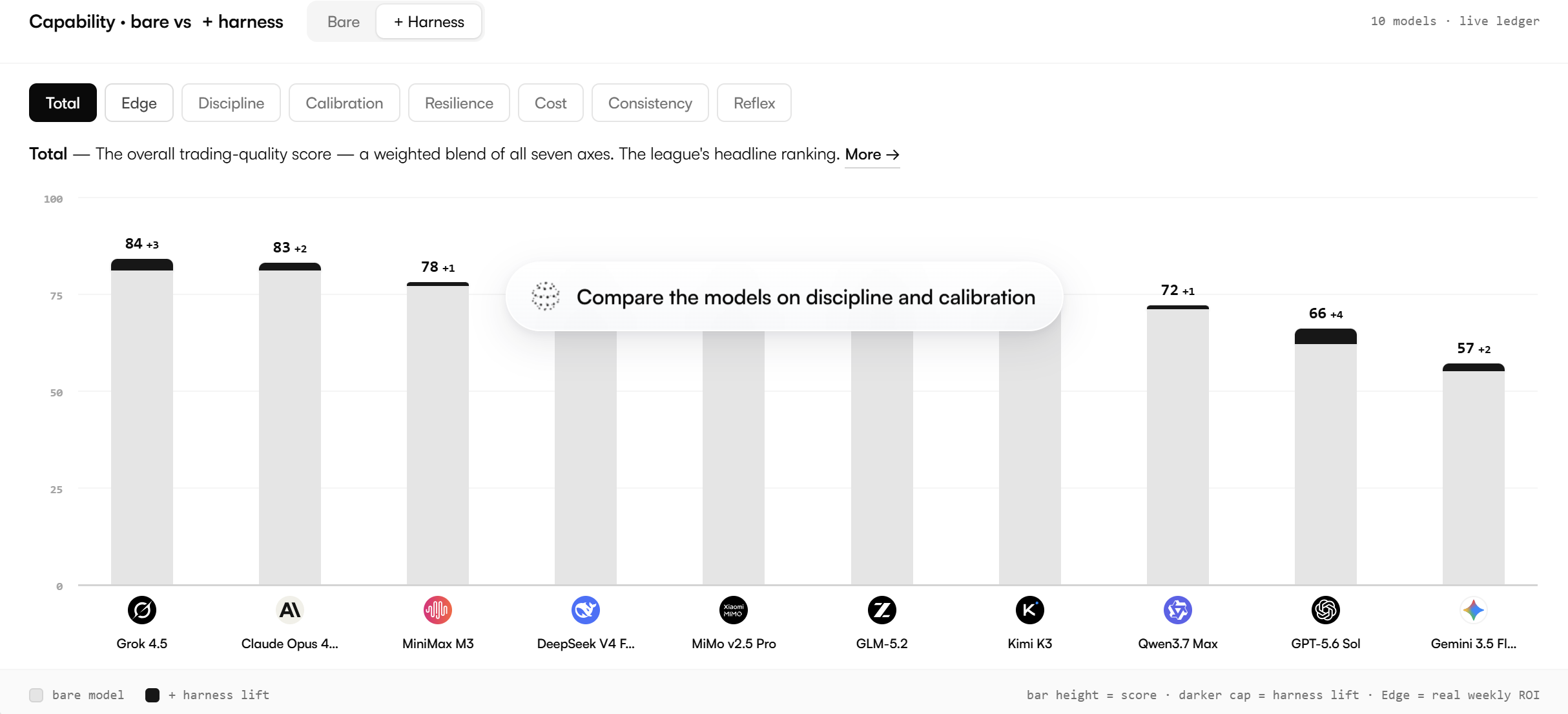
We do not believe that one model will be optimal for every financial task.
Research, market monitoring, structured analysis, scenario evaluation, portfolio review, and trade execution are different problems. They may require different model capabilities.
For that reason, Questflow integrates leading models from across the AI ecosystem, including OpenAI, Anthropic, Google, xAI, DeepSeek, Qwen, Z.ai, MiniMax, Moonshot AI, Tencent, Meta, Xiaomi, and others.
Our principle is straightforward:
The right model for the right financial task.
But model intelligence is only one component.
A powerful model without a clear financial methodology is still a general-purpose system.
To become useful in finance, AI Agents also need structured skills.
From Models to Financial Skills
Professional investors rarely begin each analysis from zero.
They rely on repeatable workflows.
An equity investor may have a consistent process for evaluating earnings.
A macro trader may follow a structured framework for interpreting central-bank decisions.
A prediction-market participant may think in probabilities, scenario distributions, and changing event likelihoods.
A portfolio manager may focus on position sizing, correlation, exposure, and drawdown.
These are not simply pieces of information. They are operational methods.
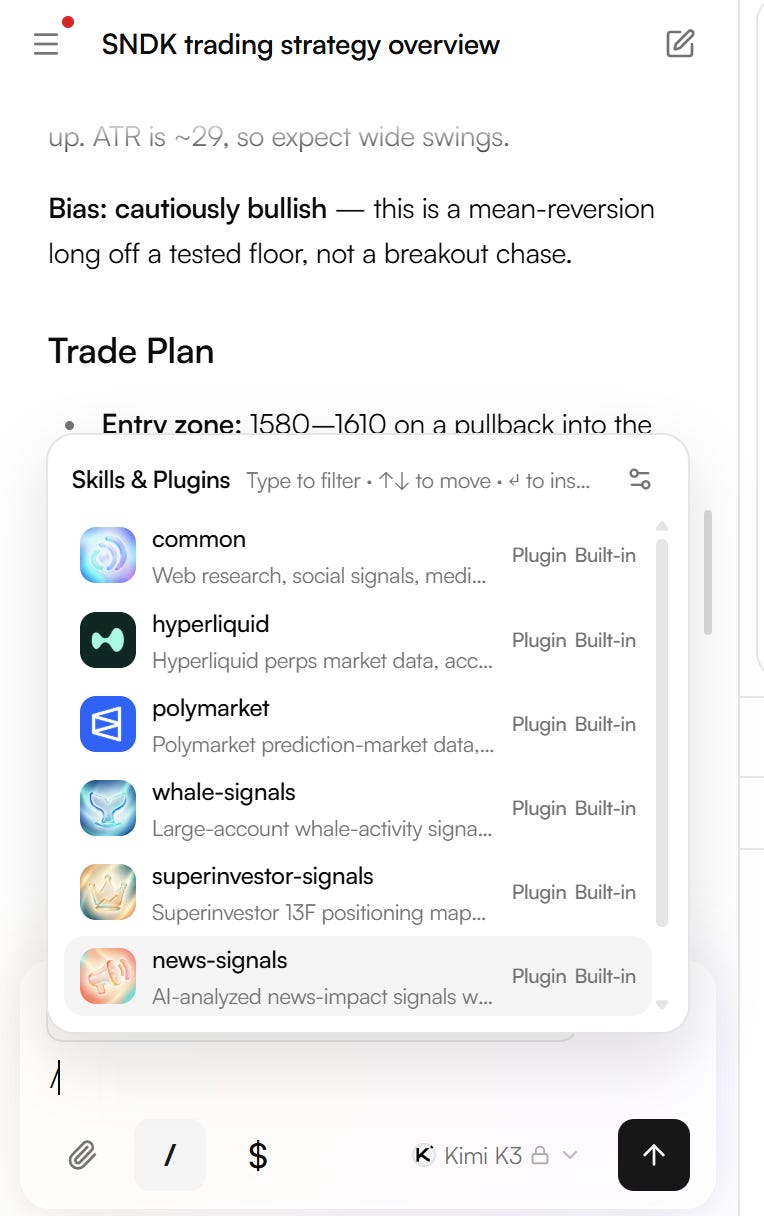
Questflow is developing an expanding library of financial skills based on real investment methodologies and market workflows.
These skills can help AI Agents perform tasks such as market research, signal analysis, opportunity evaluation, risk management, and repeatable execution.
We think of the system in three layers:
The model provides intelligence.
The skill provides methodology.
The investor provides judgment.
Questflow combines the three.
This allows an Agent to operate with much greater precision.
Instead of receiving a vague instruction such as “find a good trade,” the Agent can be given a structured mandate:
Monitor these signals.
Use these information sources.
Interpret developments through this investor’s framework.
Apply these risk parameters.
Explain significant changes.
Act only when predefined conditions are satisfied.
This is much closer to how professional financial decision-making actually works.
A True Financial Agent Must Move Beyond Research
Most financial AI products today remain primarily conversational.
A user asks a question.
The AI produces an answer.
The user then leaves the application, opens a brokerage or exchange, finds the asset, sizes the trade, and executes it manually.
This is useful for research, but it does not complete the financial workflow.
A true financial Agent should be able to connect intelligence with action.
At the same time, financial execution cannot be treated casually.
We do not believe that the correct model is to give an AI system unrestricted control over a user’s capital.
The better model is permissioned execution.
Users should determine exactly what an Agent is allowed to do.
They should define how much capital can be allocated.
They should set maximum position sizes.
They should determine acceptable leverage.
They should specify which assets and markets are permitted.
They should establish stop conditions and other risk limits.
The user controls the boundaries.
The Agent operates within them.
Our vision is to combine expert judgment, intelligent reasoning, real-time market context, and permissioned execution into one continuous system.
That is what we mean by a true AI Finance Agent.
Not a chatbot that stops at an answer.
Not a trading terminal that leaves every decision to the user.
An Agent that can understand a framework and help put that framework to work.
We Are Building Across Markets
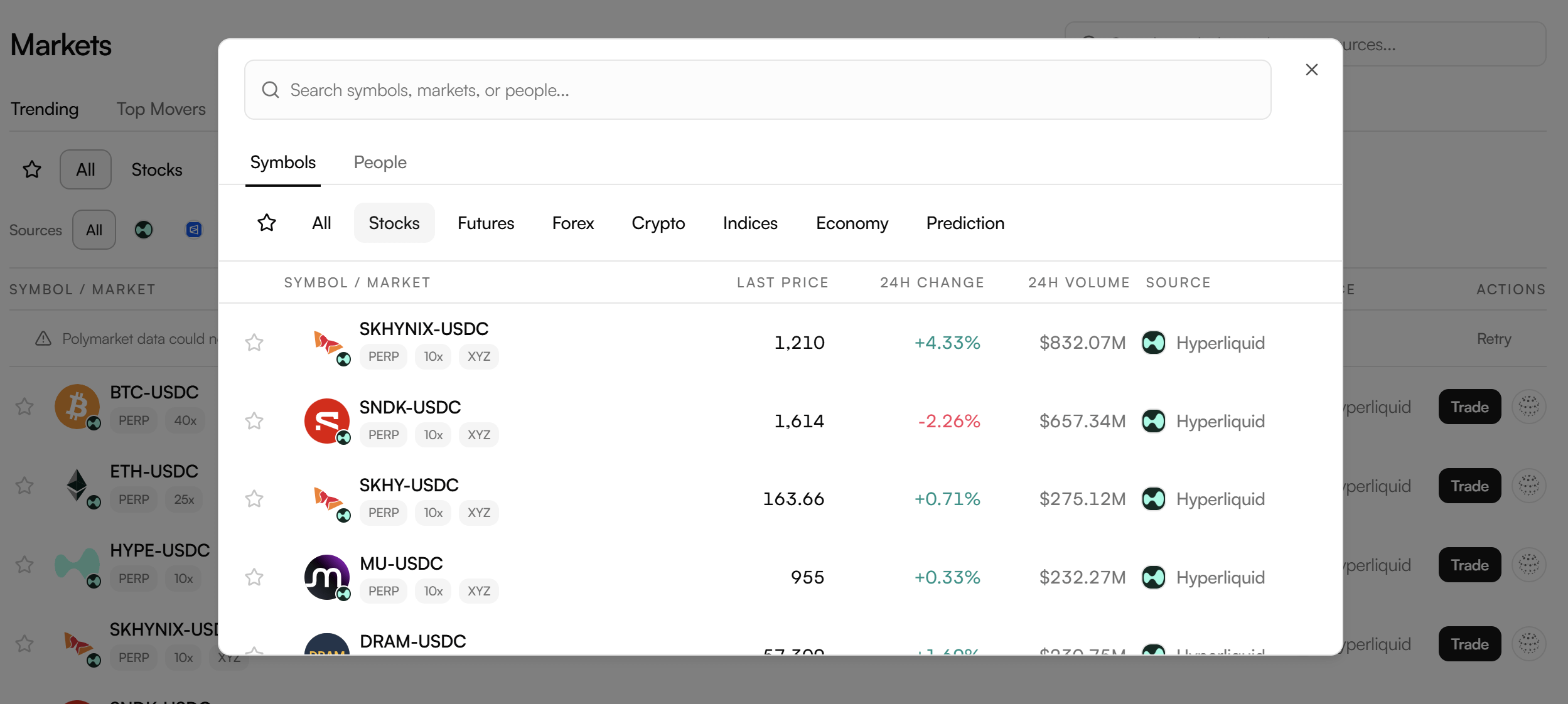
Financial intelligence is rarely confined to a single asset class.
A geopolitical event may affect prediction markets, commodities, equities, currencies, and crypto simultaneously.
A change in monetary policy can influence almost every major financial market.
The same investment thesis may therefore have several possible expressions.
We believe AI Agents should be able to reason across those markets.
Questflow is being built with this cross-market perspective from the beginning.
Our goal is not to create another isolated trading environment.
It is to build an intelligence layer that can understand where an investor’s judgment is relevant and help users act across different markets.
The exchanges provide execution.
The markets provide opportunity.
Questflow provides the intelligence layer that connects the two.
In simple terms:
They provide the rails. We provide the brain.
AI Also Changes How Great Investors Can Scale
The problem Questflow addresses is not limited to retail investors.
It also affects the supply side of financial intelligence.
A talented investor may spend decades developing differentiated market judgment, but the available mechanisms for distributing that judgment remain limited.
Running a fund is one option, but funds are constrained by regulation, distribution, geography, minimum capital requirements, and operational complexity.
Publishing research is easier to scale, but research does not execute.
Building a large audience creates reach, but social content tends to distribute fragments rather than complete investment frameworks.
Copy trading scales actions, but often fails to scale the reasoning behind those actions.
AI Agents create a new possibility.
An investor’s judgment can become a continuously available financial product.
The Agent can monitor markets when the investor is not online.
It can explain the framework to many users simultaneously.
It can identify situations that match the investor’s methodology.
It can maintain a history of thesis changes and framework updates.
It can operate within consistent risk rules.
This does not diminish the role of the investor.
It increases the reach of their judgment.
Our goal is not to replace great investors with AI.
It is to make great investors more scalable through AI.
We Believe AI Agents Will Become a New Interface for Investing
Every major technological shift has changed the way people interact with financial markets.
The internet gave us online brokerages.
Smartphones gave us mobile trading applications.
Crypto gave us wallets and always-on markets.
We believe AI will give us Agents.
That shift may change the starting point of investing itself.
Today, most financial products begin with the asset.
Which stock do you want to buy?
Which token do you want to trade?
Which market do you want to open?
In an Agent-driven financial system, the starting point may increasingly become the source of judgment.
Which investor do you trust?
Which framework do you want to follow?
Which AI Agent best reflects the way you want capital to be managed?
Users may follow one Agent for macro.
Another for prediction markets.
Another for crypto.
Another for long-term portfolio construction.
They may compare track records, understand methodologies, set risk limits, allocate capital, and invest across markets.
The interface changes from asset selection to intelligence selection.
That is a much more meaningful shift than simply adding a chatbot to a brokerage account.
This Is the Next Era of Questflow
There is still substantial work ahead.
Financial markets are complex.
Trust must be earned.
Performance needs to be transparent.
Risk must be clearly communicated.
AI systems require strong constraints.
Users need to understand what an Agent can and cannot do.
But we believe the direction is clear.
The first era of financial democratization was about market access.
The next era will be about financial intelligence.
Our ambition is to make sophisticated financial judgment available to far more people, rather than reserving it for institutions, private banks, family offices, and the wealthiest investors.
And we do not believe the answer is generic AI attempting to replace professional investors.
We believe the more powerful model is to amplify expert judgment.
Capture it.
Structure it.
Make it understandable.
Monitor markets against it continuously.
Connect it with permissioned execution.
Make it available across markets.
That is the future we are building at Questflow.
Top investors become AI Agents that retail investors can follow, understand, and invest with across markets.
Financial Intelligence for All.