

Introduction: One Belief, One Year of Proof
Every serious product begins with a belief.
Questflow’s belief has remained consistent since day one:
AI will not stay inside isolated chat interfaces.
It will exist as autonomous agents — collaborating with one another, operating across platforms, and participating in real economic activity.
But belief alone is not enough.
The real challenge is execution:
What must be built, partnered, tested, and validated for this future to actually work?
2025 was the year Questflow committed to answering that question — not through speculation, but through a sequence of concrete actions. Each month, each partnership, and each product decision was a deliberate step toward the same long-term goal.
This annual review is structured around the core themes we worked on all year, with the specific events that brought those themes to life.
Theme I — Building Agent-to-Agent Collaboration as the Default
Core Belief
The future of AI is not a single intelligent model, but systems of agents that collaborate.
Why This Matters
Real-world tasks are multi-step, multi-role, and multi-context. An agent economy built on isolated endpoints cannot scale.
Validating the Problem
January
We began 2025 by forming the core Questflow team and aligning internally on one key focus: agent collaboration over individual intelligence. This shaped our product priorities for the entire year.
February — ETHDenver
At ETHDenver, conversations with developers revealed a consistent gap: excitement around agents, but a lack of tooling for coordination. Most “agents” were still single-model scripts.
This feedback confirmed our direction — and sharpened our urgency.
Turning Collaboration into Infrastructure
March — MCP Activation
With MCP activation, Questflow accelerated how agents could be composed, reused, and orchestrated. This was a turning point from experimentation to scalable systems.
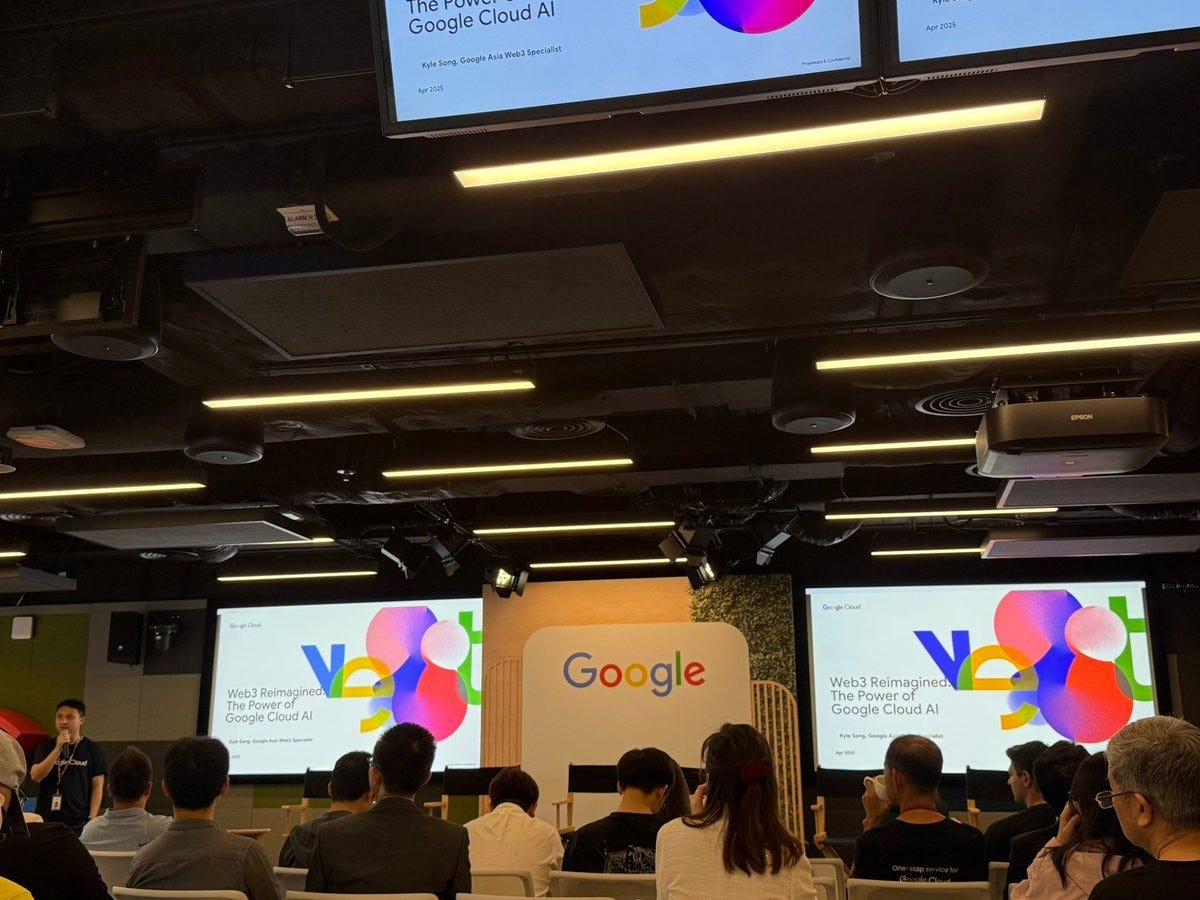
April — Google A2A & Google for Startups Tier 1
Our involvement in Google’s Agent-to-Agent (A2A) initiatives validated this direction externally. Being selected into Google for Startups Tier 1 wasn’t just recognition — it aligned Questflow with a broader industry shift toward multi-agent collaboration.
Ecosystem Recognition
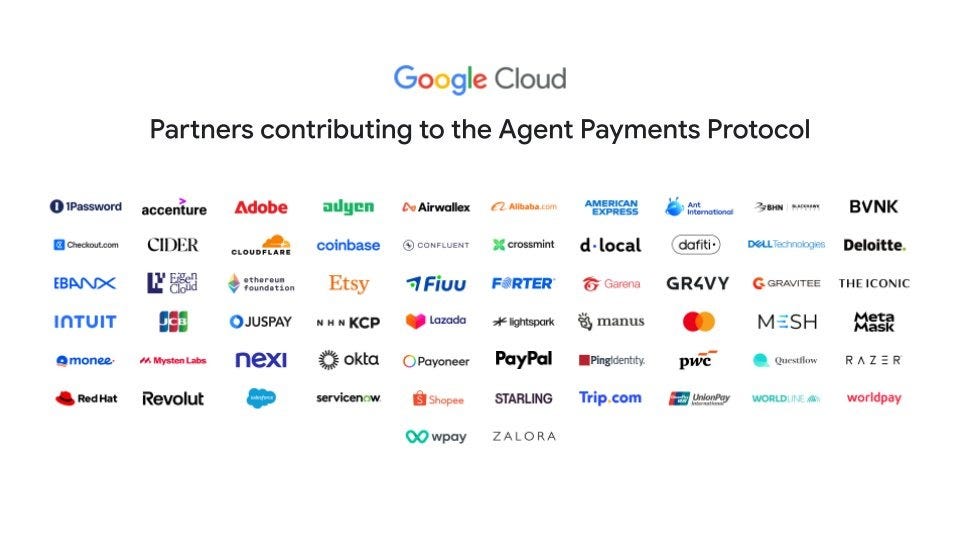
September — Google AP2 Highlight
Questflow was highlighted within Google’s AP2 ecosystem, reinforcing our position as an infrastructure layer for agent collaboration rather than a single-agent product.
Theme II — Giving Agents Economic Autonomy
Core Belief
Agents without economic capability are tools, not participants.
Why This Matters
Autonomous systems must be able to transact, coordinate value, and settle outcomes — otherwise they remain dependent on humans.
Laying Economic Foundations
June — Coinbase CDP Expansion
Questflow expanded its partnership with Coinbase Developer Platform to support agent wallets and upcoming agentic payment flows.
July — Fundraising & Stablecoin Integration
Our fundraising announcement coincided with deeper stablecoin integrations via Circle, ensuring agents could operate in real economic environments, not simulations.

x402 Goes Live
August — x402 Launch & Base App Integration
Questflow-powered agents launched inside the Base App, bringing x402 agent payments into a consumer-facing environment.
This marked a shift from concept to usage.

October — Token2049 & Multichain Expansion
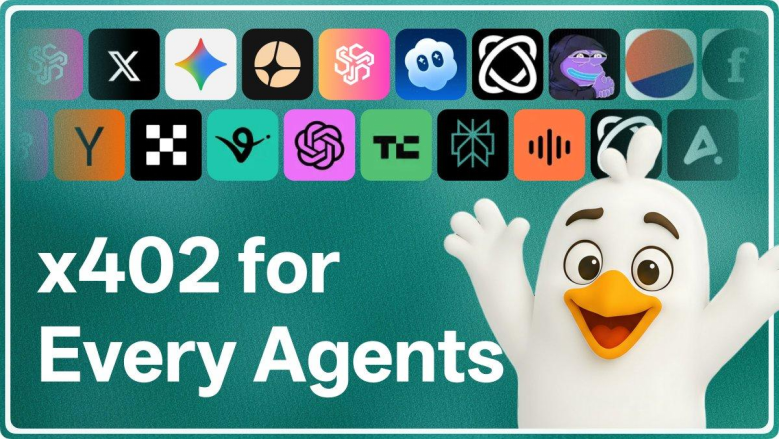
At Token2049, discussions moved beyond “what is x402?” to “how do we scale it?” Questflow expanded x402 support across chains like XLayer and Mantle, reinforcing interoperability.

Community and Leadership
November — “x402 for Everything” (Singapore)
Questflow co-hosted x402 for Everything with Coinbase in Singapore, bringing together Base, Mantle, Monad, Polygon, and more. This event symbolized Questflow’s evolution from builder to ecosystem connector.

Theme III — Bringing Agents into Everyday Life
Core Belief
Adoption happens when agents solve human problems — not when they impress developers.
Product and Identity Shift
May — Rebranding & Tars 2.0 Pro
Questflow rebranded to reflect a more mature vision: clarity, composability, and real-world use cases.
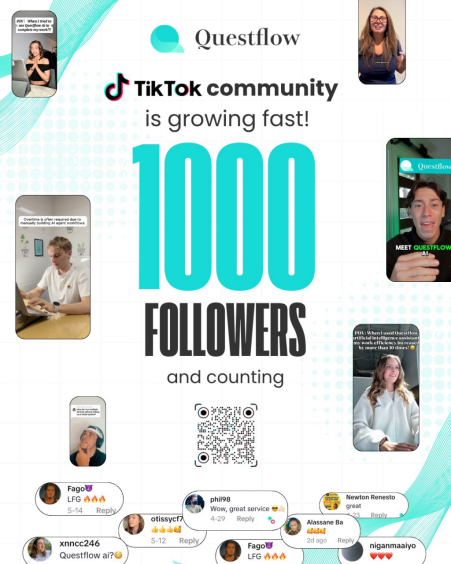
June — Distribution Expansion
We expanded Questflow’s presence across YouTube and TikTok, not as marketing channels, but as storytelling platforms for what agents could do in daily life.
Mini Apps & Human-Centered Agents
December — Dashboard Mini Apps
By year’s end, Questflow introduced dashboard-based mini apps — agents organized around tasks like holiday planning, gift selection, reflection, and New Year planning.
These experiments proved something essential:
when agents respect context and emotion, they become companions rather than tools.
Theme IV — Questflow’s Role: Connector, Orchestrator
Core Belief
The agent economy will not be owned by one model, one chain, or one company.
Throughout 2025: Strategic Positioning
Across the year, Questflow:
Integrated with both Google and OpenAI ecosystems
Worked across multiple chains and communities
Prioritized openness and composability over exclusivity
This philosophy allowed Questflow to collaborate deeply without becoming locked into any single platform.
Seeing the Whole System
When viewed month by month, 2025 was busy.
When viewed as a whole, it was coherent.
Every event — from ETHDenver to Singapore, from MCP activation to dashboard mini apps — expressed the same intent from a different angle.
Questflow didn’t chase trends.
We built the conditions for agents to exist meaningfully.
Questflow’s journey in 2025 was not defined by speed, but by alignment.
Alignment between belief and action.
Between vision and infrastructure.
Between what agents need — and what we chose to build.
The agent economy is no longer theoretical.
It is forming.
And we are building it — one coordinated step at a time.
Looking Forward: 2026
If 2025 was about building the system,
2026 will be about making it indispensable.
Our focus remains:
Stronger agent collaboration
Deeper economic autonomy
Easier paths from idea to deployed agent
A global builder community aligned around open systems