

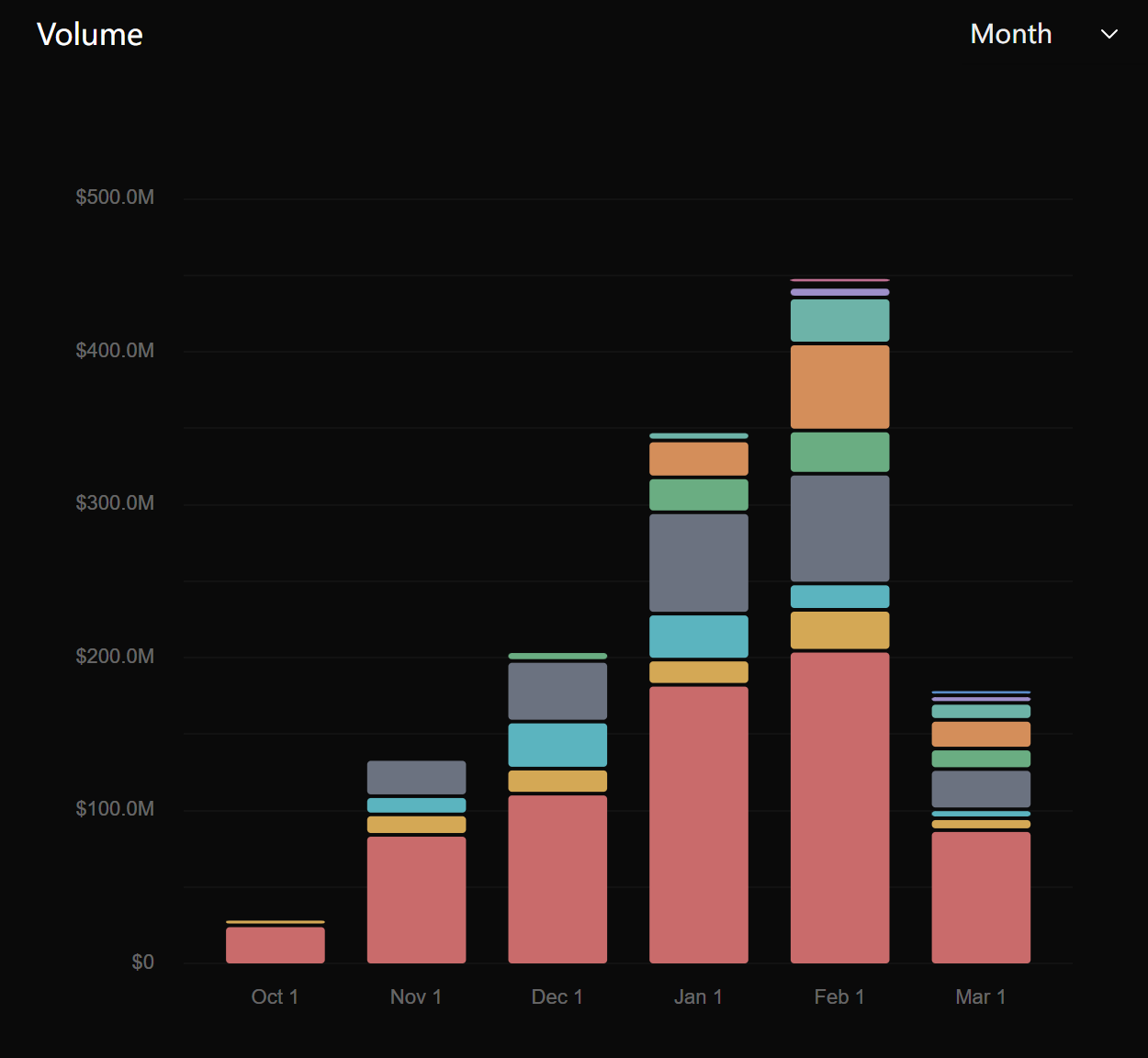
Check Polymarket’s builder leaderboard right now. Betmoar: $64.92 million in weekly volume. The top 50 projects combined? Over $100 million in seven days.
These aren’t vanity metrics. They represent real money flowing through an ecosystem that barely existed two years ago. Polymarket is handing out $2.5M+ in grants. Developers are building. Users are trading. The infrastructure works.
Prediction markets graduated from crypto experiment to legitimate financial infrastructure.
But here’s what nobody’s saying out loud: the tools haven’t kept up with the market’s maturity.
Scroll through those 50 builder projects. What are they actually building? Cleaner interfaces. Faster mobile apps. Smoother onboarding flows. Better transaction UX.
All valuable. All necessary. All solving the same fundamental problem: making it easier to execute trades you’ve already decided to make.
Nobody’s solving the harder problem: figuring out which trades to make in the first place.
The market grew up. The opportunity expanded. The information complexity exploded. And we’re still using Stone Age tools to navigate it.
The Maturity Paradox
Here’s what market maturity actually created:
Thousands of simultaneous markets. Polymarket alone runs more event contracts than most people can track. Add Kalshi, Hyperliquid’s new HIP-4 platform, and the dozens of emerging competitors—you’re looking at an information landscape that’s literally impossible to monitor manually.
Cross-domain complexity. A political development impacts economic markets. A tech launch delay affects multiple related predictions. Sports outcomes correlate with cultural trends. Miss these connections? You miss edges.
Faster information velocity. Markets that used to take hours to price information now move in minutes. Social media sentiment shifts before news outlets publish. On-chain data signals opportunities that vanish before most people notice them.
More sophisticated participants. You’re not just competing against casual bettors anymore. You’re up against algorithmic traders, data analysts, and increasingly, AI-powered bots that monitor everything 24/7.
The prediction market opportunity grew. The difficulty of capturing that opportunity grew faster.
And what are most builders focusing on? Execution speed. Interface polish. Mobile-first design.
These are solutions to yesterday’s problems.
What Technical Innovation Actually Looks Like
Before we talk about what’s missing, let’s acknowledge what real innovation looks like—because it’s happening, just not where most people are looking.
Hyperliquid’s HIP-4 proposal is genuinely interesting, not because it’s “another prediction market” but because it demonstrates composability.
Their Outcome contracts run natively on HyperCore L1, which means they integrate with perpetual contracts on the same platform. You can combine a long ETH position with a downside protection Outcome contract, and the system recognizes reduced risk exposure automatically—releasing collateral for other uses.
You just built a structured product using DeFi building blocks. No investment bank. No complex paperwork. Just composable financial primitives.
This is what mature infrastructure enables: prediction markets evolving from isolated betting platforms into integrated DeFi components that combine with perpetuals, options, lending, and spot positions.
The technical innovation is real. Composability unlocks new strategies for sophisticated users who understand how to combine instruments.
But here’s the thing: composability is a supply-side breakthrough. Better infrastructure. More powerful tools. Expanded design space for complex strategies.
It doesn’t solve the demand-side problem: How does a regular user—someone with domain expertise but not unlimited screen time—actually find profitable opportunities in this increasingly complex landscape?
The Real Bottleneck: Information Processing
Let me describe what successful prediction market participation actually requires in 2026:
Continuous monitoring across domains. You need to track news feeds, social media sentiment, on-chain transaction data, market liquidity shifts, and correlated events across multiple categories. A political announcement might move economic markets. A gaming studio delay might affect several entertainment predictions. Miss the connection, miss the edge.
Pattern recognition at scale. Markets misprice constantly. But which mispricings are exploitable? You need to understand both the event domain (politics, sports, tech) and market mechanics (how odds move, where liquidity sits, what patterns predict opportunity).
Speed matters more than ever. By the time information becomes “public knowledge,” smart money has already repositioned. The window between “edge exists” and “edge captured” is measured in minutes, sometimes seconds.
Context switching kills efficiency. Even if you’re an expert in one domain—say, political forecasting—you can’t monitor every relevant market within that domain simultaneously. The cognitive overhead of jumping between dozens of related predictions is enormous.
Here’s the uncomfortable truth: the bottleneck isn’t execution anymore. It’s information processing.
You can have the fastest trading interface in the world. Doesn’t matter if you don’t know which markets to trade or when odds are wrong.
The builder ecosystem is still optimizing for execution speed. The actual constraint is intelligence capacity.
What Signal Intelligence Actually Means
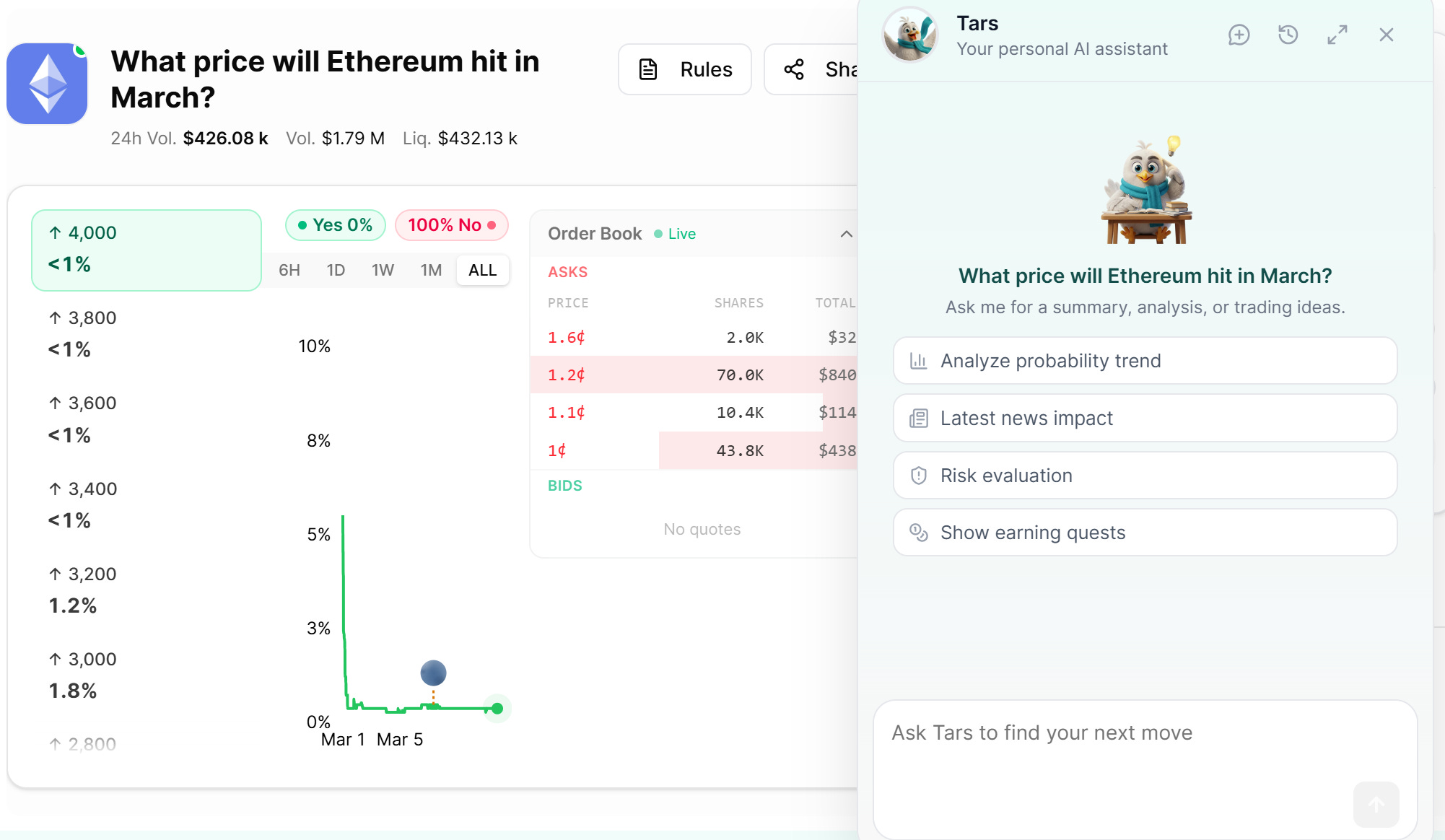
This is where Questflow diverges from the “better interface” approach.
We’re not building another prediction market frontend. We’re building the intelligence layer that sits between raw market data and human decision-making.
Here’s what that looks like in practice:
Full-spectrum data synthesis. AI agents continuously process on-chain transactions, social media sentiment, news events, market liquidity changes, and cross-market correlations. Not just “faster than humans”—processing information streams humans physically cannot monitor simultaneously.
Opportunity detection, not raw data. The platform doesn’t dump charts and numbers on you. It surfaces specific, actionable signals: “This political market appears mispriced based on recent polling data and historical precedent.” “Social sentiment on this tech launch is shifting faster than market odds reflect.” “Smart money just repositioned here—three data sources suggest opportunity.”
Personalized to your knowledge domain. The football expert gets sports market signals. The crypto native sees token launch and protocol event opportunities. The political analyst gets election and policy market alerts. Your AI learns what you actually know and where your edges exist.
Contextual, not comprehensive. You don’t need to see every market. You need to see the markets where you have edge, at the moment when that edge is exploitable.
Most importantly: you’re still making the calls. The AI handles continuous monitoring, pattern recognition across massive data streams, and early warning when opportunities emerge. You bring domain expertise, judgment, and strategic execution.
Think of it as having a research team that never sleeps, processes information at machine speed, and exists solely to surface edges you’d otherwise miss—not because you lack intelligence, but because you lack infinite attention.
Why This is Important
Technical infrastructure can be replicated. Hyperliquid builds composable derivatives—impressive. Others will copy the approach. Code is code. Contracts are contracts. The technical moat is real but ultimately temporary.
Signal intelligence is different because it requires:
Data infrastructure that aggregates information across chains, platforms, news sources, and market venues in real-time. Not a one-time build—continuous maintenance as APIs evolve and new data sources emerge.
AI systems trained specifically on prediction market dynamics. Not general-purpose LLMs. Models that understand how information flows into pricing, how narratives shift odds, what patterns actually predict mispricing.
Continuous learning as markets evolve. What worked six months ago might not work today. The edge comes from systems that adapt.
But more fundamentally: signal intelligence solves the actual problem mature markets create.
When prediction markets were small and simple, you could manually browse opportunities. When they were niche, only sophisticated traders participated.
Now they’re mainstream. Thousands of markets. Millions in volume. Diverse participants. Complex information landscapes.
The constraint shifted from “can I execute” to “should I execute, and where.”
Questflow’s approach: Help users discover opportunities matched to their actual expertise. Let them leverage knowledge and judgment to capture returns. Create a positive feedback loop where engagement improves signal quality over time.
The future we’re building: Users define custom signal logic. “Alert me when social sentiment on tech IPOs shifts positive while odds stay flat.” “Flag political markets where polling data diverges from pricing by more than 15%.” “Notify me when smart money positions in sports markets I follow.”
Your AI agents execute continuous monitoring and analysis. You focus on strategic decisions in domains where you actually have insight.
The Evolution Nobody’s Building Toward
Polymarket’s $100M weekly volume proves the market matured. Hyperliquid’s HIP-4 shows how technical composability expands possibilities.
But the next evolution isn’t better infrastructure or prettier interfaces.
It’s intelligence infrastructure—systems that help humans win by amplifying judgment rather than replacing it.
The markets grew up. The opportunities multiplied. The information volume exploded.
Most builders are still optimizing for execution speed. That battle is over. Execution is solved.
The next edge is signal intelligence: helping people discover the right opportunities at the right time, not just execute faster once they’ve decided.
That’s the gap Questflow is filling. Not another prediction market. Not another trading interface.
The intelligence layer that makes prediction markets actually useful for people who have knowledge but not unlimited bandwidth to monitor everything.
Because prediction markets only fulfill their promise when the people with real insight—the domain experts, the informed observers, the pattern recognizers—can participate profitably.
Not just the people with the fastest bots and the most screen time.
The market grew up. Time for the tools to catch up.
Questflow is building AI Agent-powered signal intelligence for prediction markets. Learn more at questflow.ai