

The last weeks of the year always arrive faster than we expect.
One moment it’s early December, and the next moment you’re juggling gift ideas, family plans, unread messages, half-formed reflections about the year that just passed, and quiet pressure to “start fresh” in the year ahead. Christmas and New Year are supposed to be warm and meaningful—but in practice, they often become cluttered with decisions, logistics, and invisible emotional labor.
This year, instead of trying to do everything myself, We decided to experiment with something different.
One user built five small mini app dashboards using Questflow—each powered by multiple collaborating AI agents—and let them help you through the season. Not as chatbots, not as generic assistants, but as personalized, task-oriented companions that asked for context first, then quietly did the heavy lifting.
What followed surprised us.
Not because the AI was “smart,” but because it was gentle.
This is the story of those five mini apps—and how agent-based AI can fit into everyday life in a way that feels human, supportive, and calm.
A Different Way to Think About AI
Most AI products still follow the same pattern:
You open a chat, type a request, and receive an answer.
Questflow works differently.
At its core, Questflow lets you organize multiple agents into a dashboard-style mini app, each agent responsible for a specific role—planning, reflection, research, writing, or emotional tone. Before anything happens, the system asks for context: who you are, where you are, what you care about, and what constraints matter.
Only then does it generate results.
This subtle shift—from “prompt first” to “context first”—makes all the difference.
For this holiday season, We created five mini apps:
A Gentle New Year Planner
A Year-in-Review Reflection Dashboard
A Holiday Message Writer
A Gift Picker Dashboard
A Christmas Planning Dashboard
Each one followed the same structure:
A background input form
A multi-agent workflow
A clear, visual dashboard as the output
Together, they formed something close to a seasonal companion.
Mini App 1: A Christmas Plan That Respected Real Life
First, we used the Christmas Planning Dashboard to tie everything together.
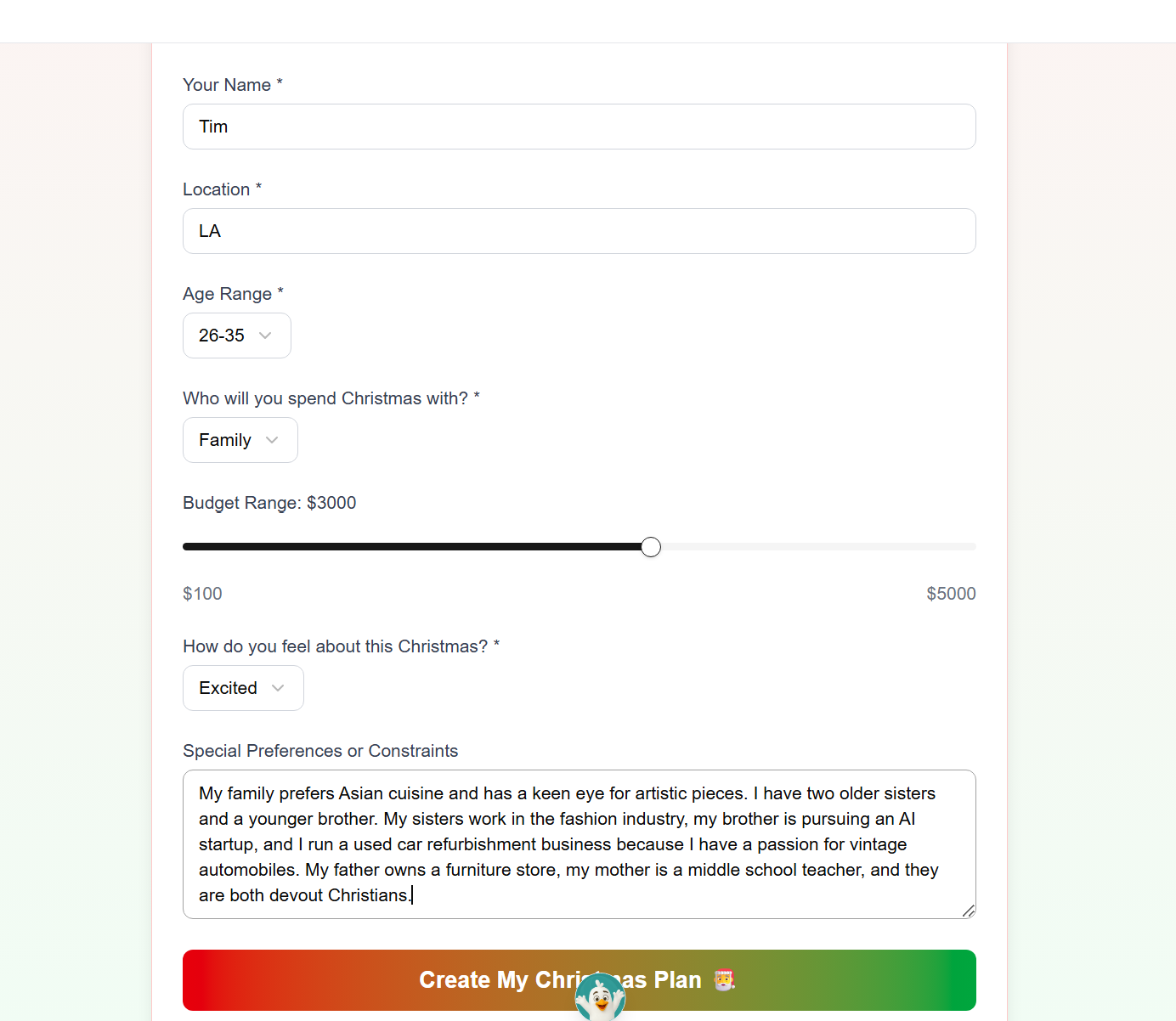
This mini app asked about:
Who You are and where we are located
Who you’ll spend Christmas with
Budget range
Emotional tone
Family preferences and constraints
From that context, the agents produced a dashboard with:
A personalized Christmas “theme”
A detailed schedule (before Christmas, Christmas Eve, Christmas Day)
A budget breakdown
Gentle reminders tied to family details
It didn’t try to optimize Christmas.
It tried to fit into it.
The reminders referenced my family’s interests, faith, and traditions. The plan respected time, rest, and relationships.
For the first time, planning didn’t feel like control—it felt like care.

Mini App 2: Choosing Gifts Without Overthinking
Gift-giving often comes with anxiety: Will they like it? Is it thoughtful enough? Is it too much?
The Gift Picker Dashboard approached this as a reasoning problem rather than a shopping problem.
It asked:
Who are you buying for?
Your relationship and their age
Interests and personality
Budget range
Preferences to avoid
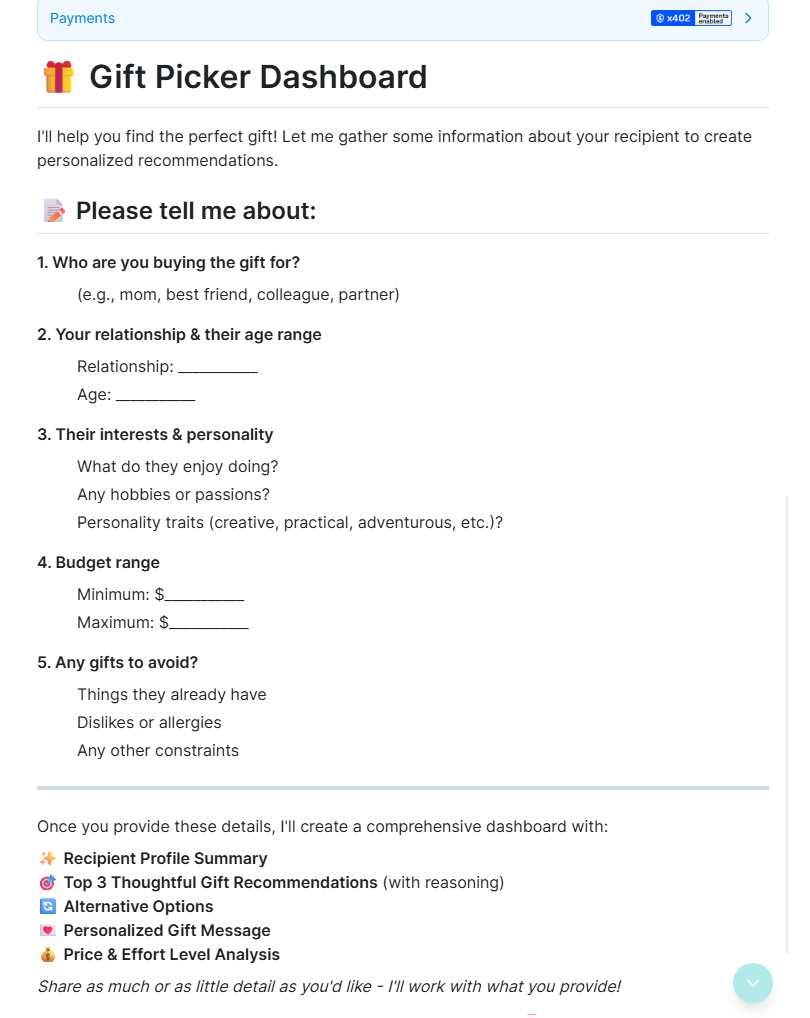
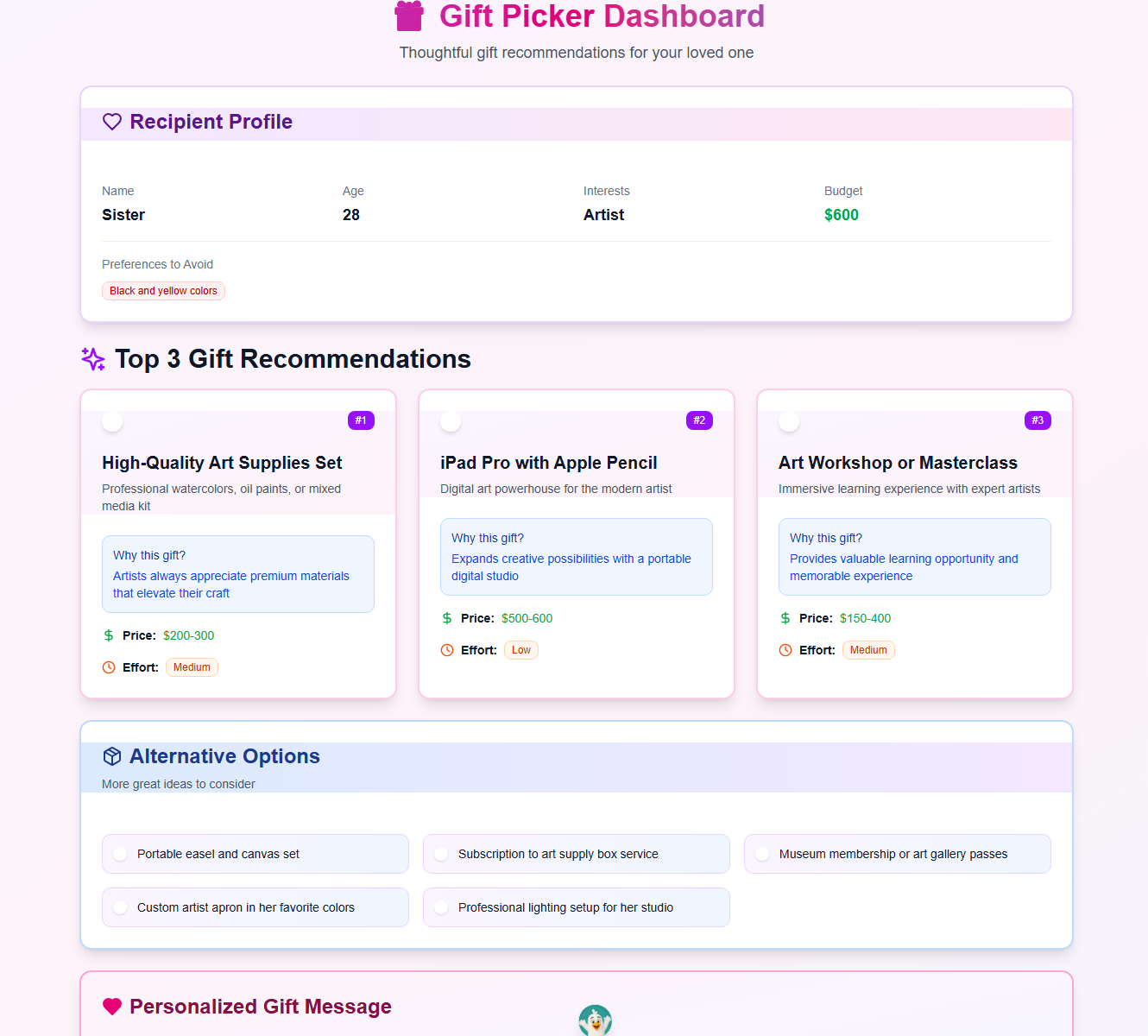
The resulting dashboard included:
A concise recipient profile
Three gift recommendations, each with reasoning
Effort level and price range
Alternative options
A personalized gift message
Instead of flooding us with links, it offered clarity.
You weren’t just choosing an object—You were choosing an expression of care that matched the person.
Mini App 3: Writing Holiday Messages That Sound Like You
Holiday messages are small things, but they matter.
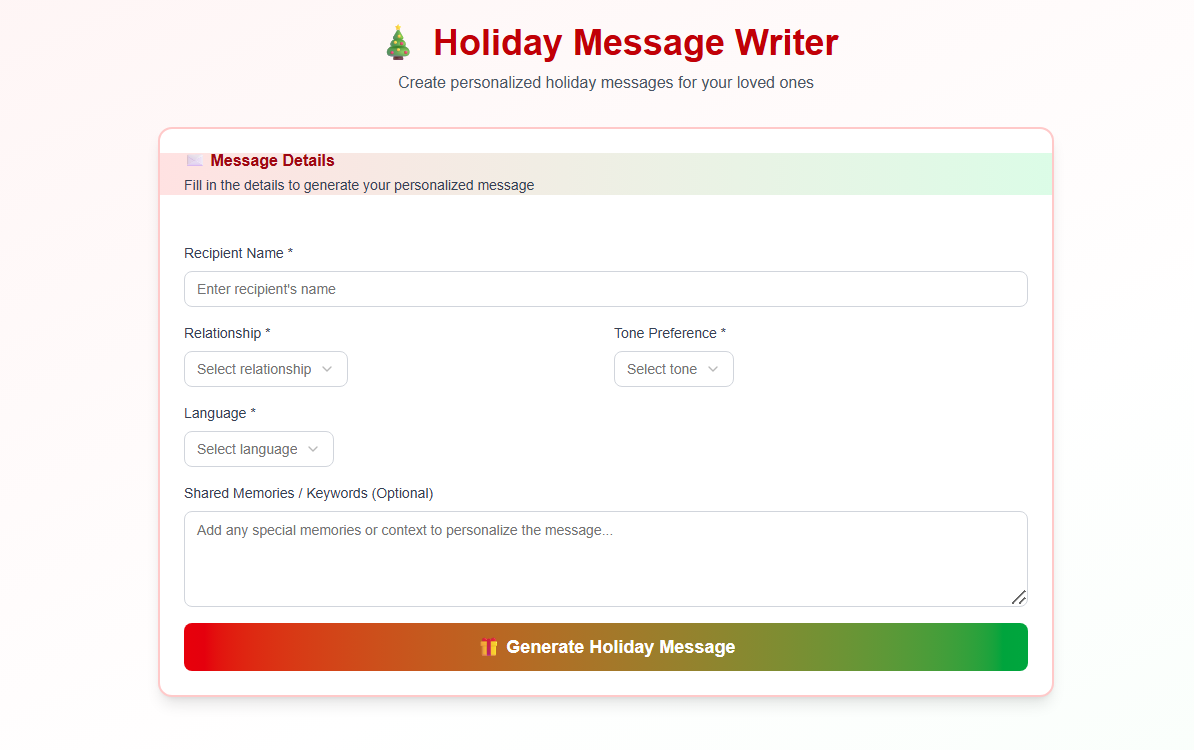
This mini app focused on one simple task: writing messages that feel personal, not generic.
Before generating anything, it asked:
Who is the recipient?
What’s your relationship?
What tone do you want?
Any shared memories or inside jokes?
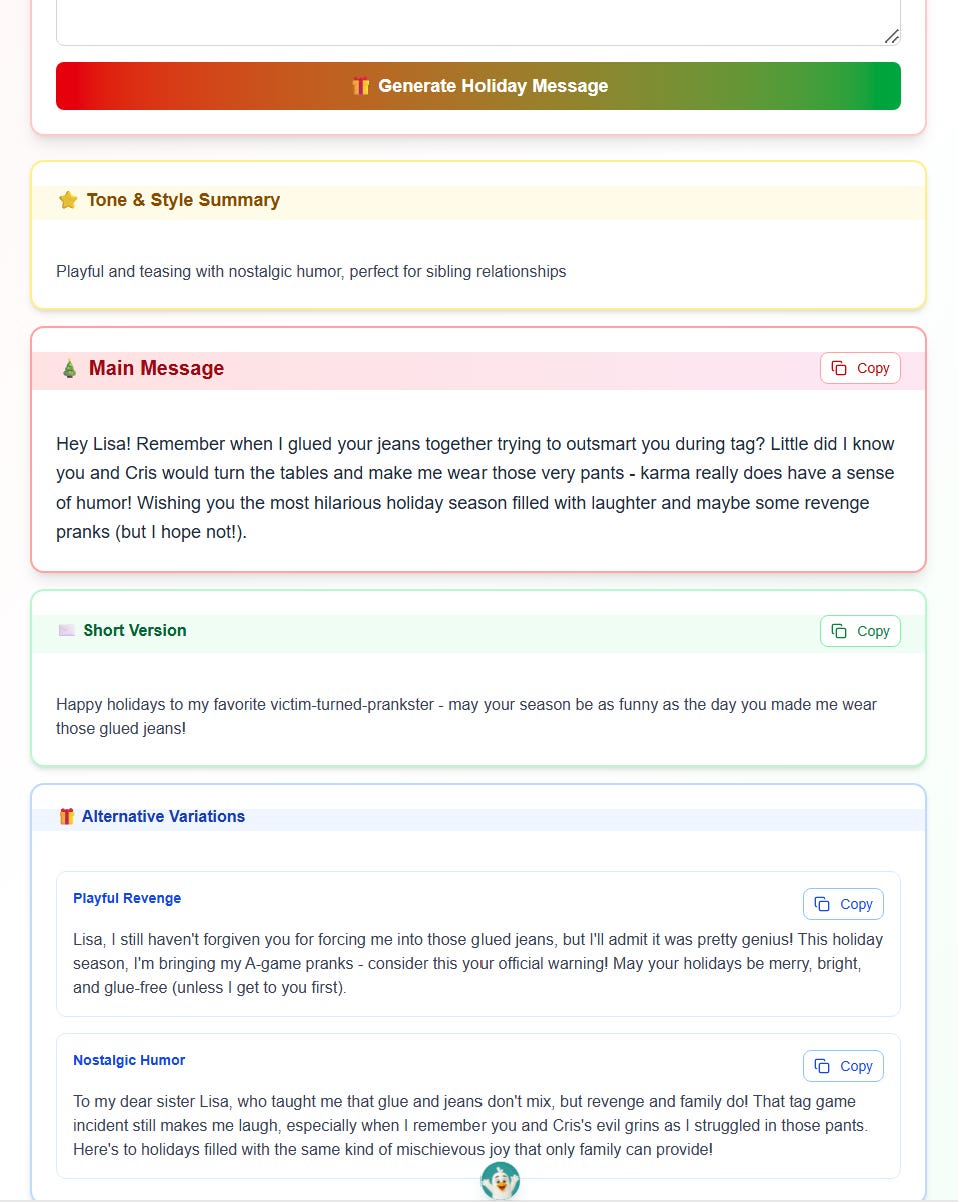
From there, the dashboard presented:
A tone and style summary
A main message
A shorter version
Alternative variations with slightly different moods
What impressed user wasn’t just the writing quality—it was the specificity. The messages referenced shared experiences, used the right emotional distance, and avoided sounding like something copied from a template.
It saved time, yes—but more importantly, it preserved sincerity.
Mini App 4: A Year-in-Review That Actually Felt Personal
Next came reflection.
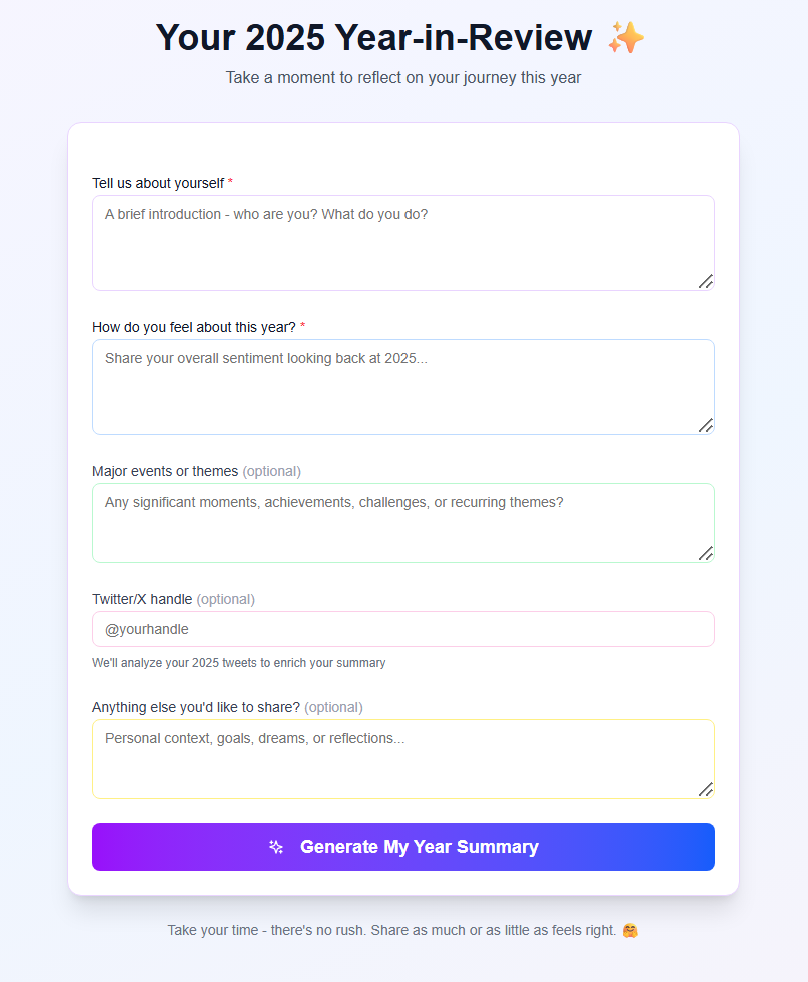
The Year-in-Review dashboard asked for:
A short self-introduction
How You felt about the year
Major themes or moments
Optionally, my Twitter/X handle for additional context
By linking public posts with your own written reflections, the agents were able to identify patterns You hadn’t consciously articulated.
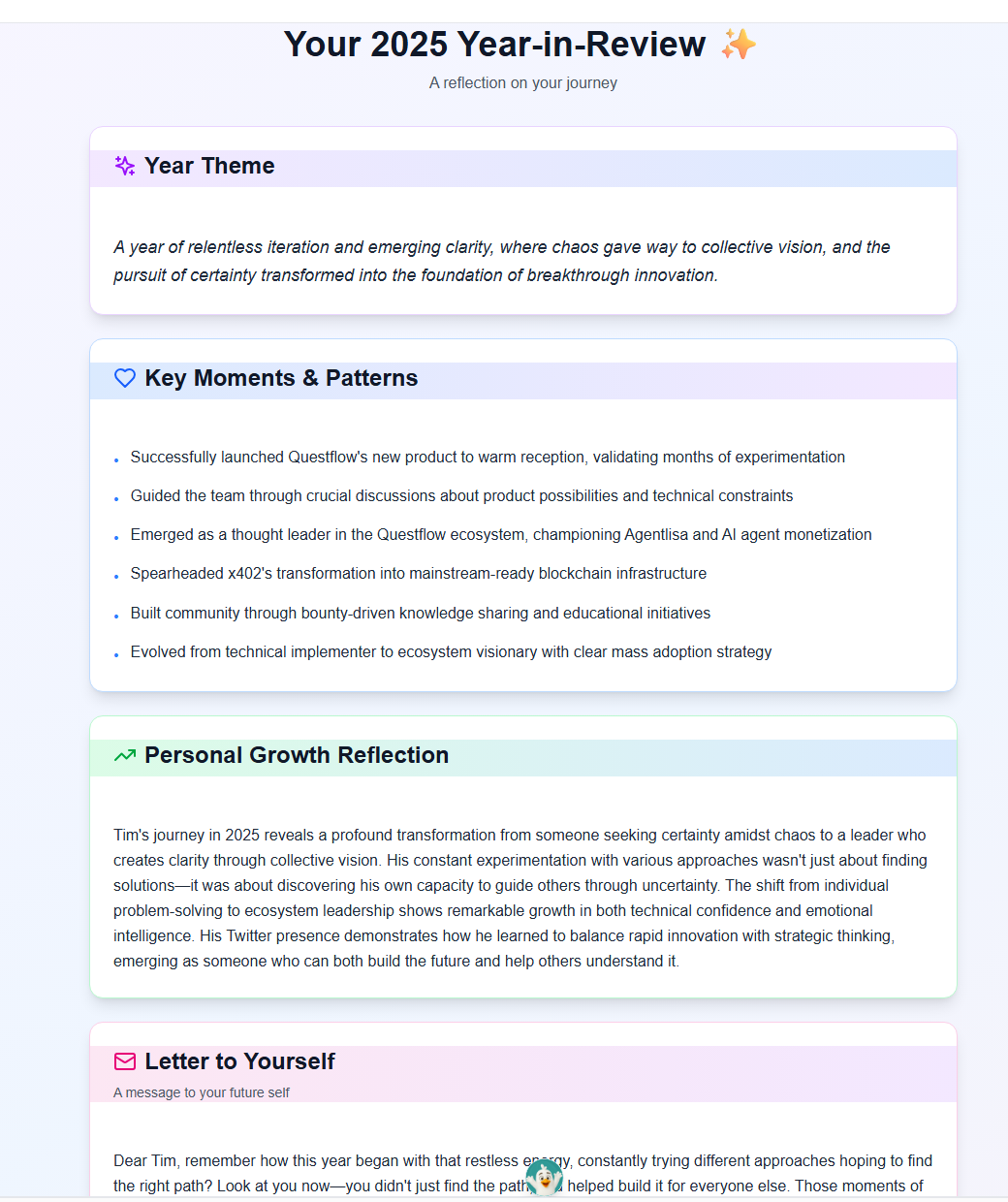
The dashboard unfolded in sections:
A single sentence that captured the theme of your year
A list of key moments and recurring patterns
A reflection on personal growth
A short letter written “to your future”
Reading that letter was unexpectedly emotional.
It didn’t summarize achievements—it narrated a journey. The agents didn’t judge or exaggerate. They connected dots, softened edges, and framed the year as something coherent, even with its messiness.
For the first time in a long while, closing the year felt complete.
Mini App 5: A Gentle New Year Plan
The last thing we tackled was New Year planning—traditionally a source of quiet stress.
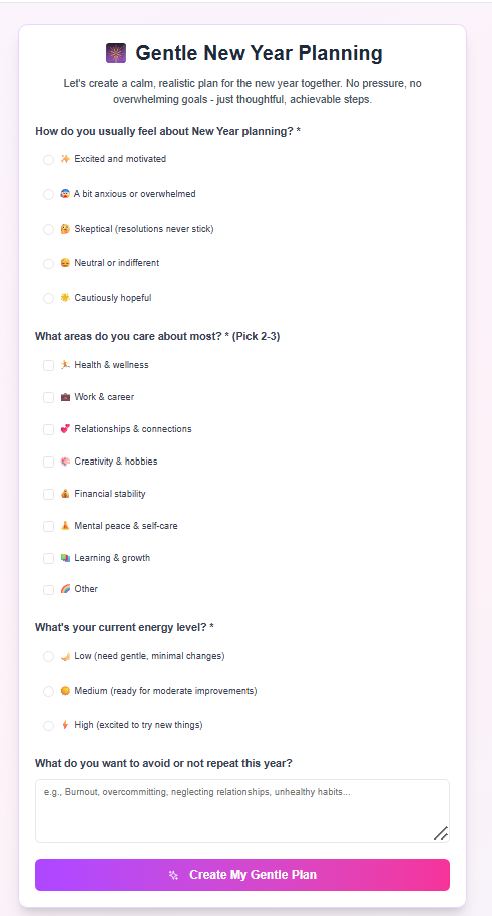
Instead of asking, “What are your goals for next year?”, this mini app began with softer questions:
How do you usually feel about New Year planning?
What areas of life matter most to you right now?
What’s your current energy level?
What do you want to avoid repeating?
Once you filled in the form, the agents went to work.
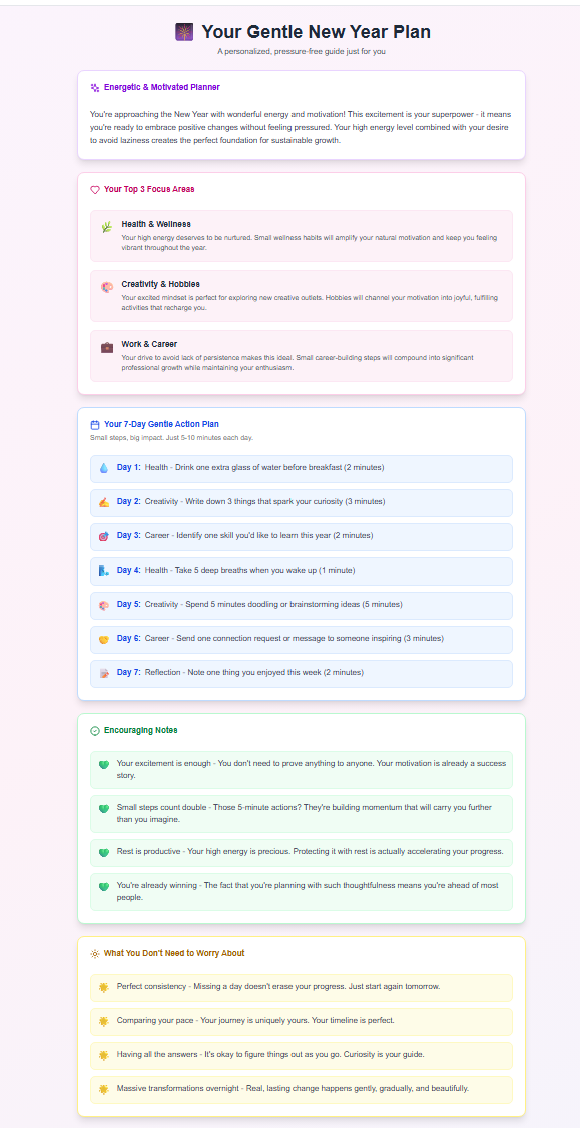
The resulting dashboard didn’t push ambitious resolutions. Instead, it reflected your emotional state back to you, identified two or three focus areas, and suggested a 7-day gentle action plan with steps that took five minutes or less.
What stood out most was the final section: What You Don’t Need to Worry About.
It reminded us that missing a day doesn’t erase progress, that comparison is optional, and that rest is not failure.
This didn’t feel like productivity software.
It felt like permission to start the year without pressure.
What These Five Mini Apps Taught Me
Individually, each dashboard solved a small problem.
Together, they revealed something larger about how AI can show up in daily life.
First, context matters more than cleverness.
The quality of the output was directly tied to how well the system understood who You were.
Second, agents shine when they collaborate.
Planning, reflection, writing, and emotional tone are different skills—and Questflow’s agent-to-agent orchestration made that separation natural.
Third, structure creates calm.
Dashboards are not just UI—they’re a way of turning complex tasks into something visible, navigable, and finite.
And finally, AI doesn’t need to replace human effort to be valuable.
It can simply hold the structure so we can bring the meaning.
From Personal Tools to Shared Mini Apps
One of the most exciting parts of building these mini apps is that they aren’t just for one user.
Each dashboard can be shared.
Each one adapts to whoever opens it.
Every user brings their own background, and the agents respond accordingly.
This turns personal workflows into community tools—small, focused, and reusable.
In the future, anyone can:
Open the same New Year Planner
Fill in their own context
Receive a plan that feels uniquely theirs
That’s not personalization through data collection.
That’s personalization through conversation and intent.
A Quiet Ending to a Loud Year
As the year comes to a close, We don’t remember these tools as “AI features.”
We remember:
Feeling less rushed
Feeling more thoughtful
Feeling supported, not managed
That’s what Questflow enabled this season—not automation for its own sake, but space.
Space to reflect.
Space to care.
Space to begin again, gently.
And maybe that’s what good AI should do more often.
Happy holidays, and here’s to a calmer, more intentional year ahead.